Tree Removal in Palm Harbor: A First-Timer's Guide
Request your tree removal estimate
Hiring a tree service for the first time raises fair questions. What happens on the day? What does it cost? Who pays for damage? Abclunch Tree Service answers these in plain terms for Palm Harbor homeowners. You share the job details, and independent providers in our network respond. Details first, quotes second. You compare the options and decide, with no obligation.
After the Work: Preventing a Repeat in Palm Harbor
Most people plan the removal and forget the aftermath. A few steps now keep the problem from returning.
Start with the stump. Stump grinding means a machine chews the stump down below ground level. Left alone, a stump rots, sprouts new shoots, and can attract termites. In a humid climate, wood breaks down fast, so this matters.
Next, look at the trees that remain. Ask a provider to check them before hurricane season. Thinning a crowded canopy lets wind pass through instead of pushing on it. Keep mulch pulled back from the foundation, and pick replacement trees that suit the space, away from the slab and roofline.
What a Typical Job Timeline Looks Like
Knowing the sequence removes most of the stress. Here is the usual order:
- Request. You describe the tree, its location, and any damage. Photos help.
- Contact. Providers in our network reach out, often with questions of their own.
- Site visit. Many providers look at the tree before quoting. Some can quote from photos.
- Scheduling. Dates depend on weather and workload. After a storm, busy weeks are normal.
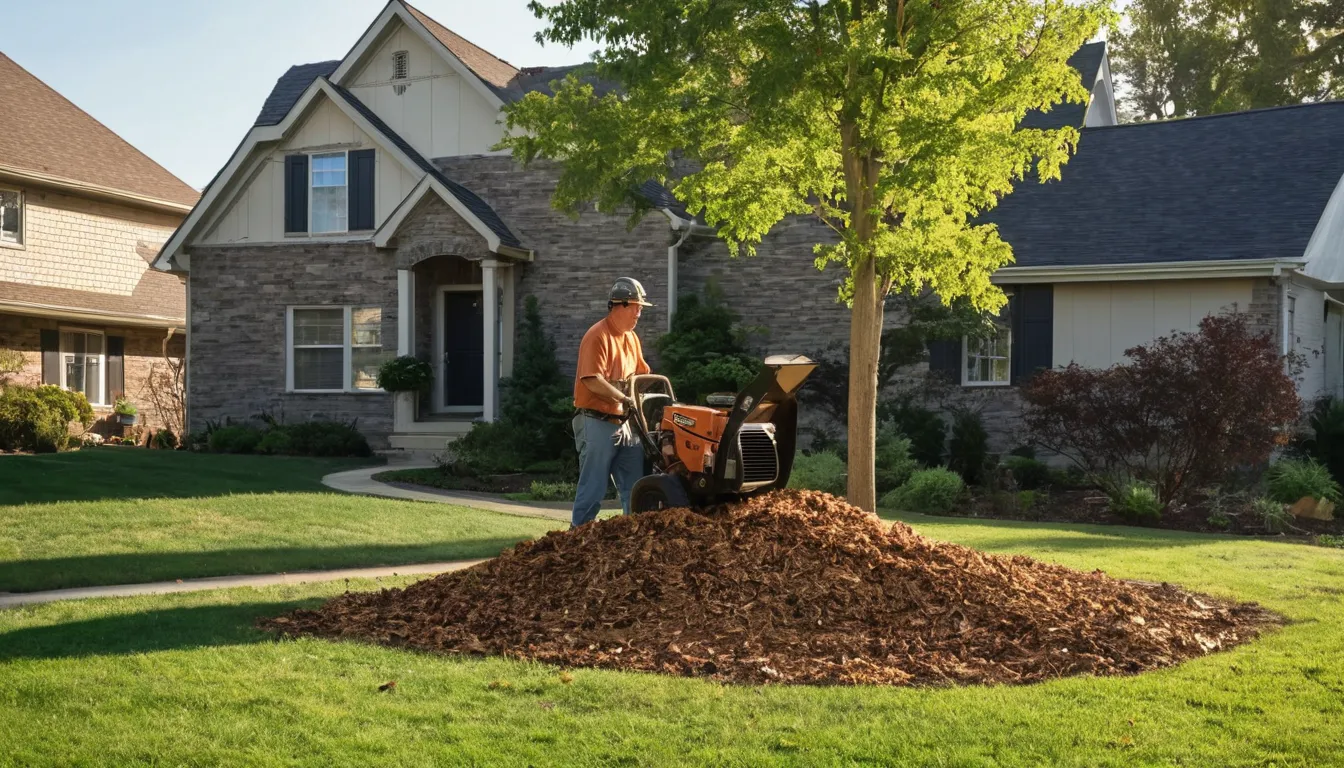
- Work day. The crew cuts the tree in sections and lowers each piece with ropes. Branches go through a chipper. Large trunks are cut and hauled.
- Cleanup. Confirm in writing whether hauling and stump work are included.
A small tree can take a few hours. A large tree near a house can take a full day or more.
For a tree already down, a tree falling service focuses on making the site safe first. Emergency tree removal and storm tree clearance often start with cutting the tree off a roof, fence, or driveway. Request a callback to check provider availability in your area.
Insurance and Documentation
Paperwork matters more than most first-timers expect. Some policies may cover sudden damage, such as a tree that falls on a house. Removal of a healthy or merely unwanted tree is usually not covered. Check your policy and ask your insurer about deductibles.
Here is what helps if you file a claim:
- Take photos and short videos before anything is moved.
- Note the date and what the weather was doing.
- Keep the written quote and the final invoice.
- Ask the provider to describe the work in writing.
Providers can often help document damage for a claim. Whether a claim is approved is up to your insurer.
Local Homes and Building Styles
Homes across this region share some traits. Many are concrete block houses on slabs, with tile or shingle roofs. Lots in older subdivisions and condo communities can be tight, so trees often stand close to roofs, pool enclosures, and walls.
This changes how the work is done. Tile roofs can crack under a falling limb or a ladder, so providers may use ropes or a crane instead. Roots can lift slabs and pavers. Condo and subdivision rules may require approval before a tree comes down, so ask your association early.
If you live in Palm Harbor and your lot is tight, mention it in your request. It helps providers plan the right equipment.
Signs of a Hidden Problem
A tree can look fine and still be failing. Warm, wet weather speeds up decay inside the trunk. Watch for these signs:
- Mushrooms growing at the base
- Hollow sounds when you tap the trunk
- Deep cracks or peeling bark
- Dead branches in an otherwise leafy crown
- A new lean, or soil lifting near the roots
- Sawdust-like debris or mud tubes, which can point to insects
One sign alone is not a verdict. Several together are a reason to have a provider take a look before the next big storm.
Request a callback to ask about an inspection, or send the details through the request form.
What Affects the Cost
Prices vary by job, so treat these as typical U.S. ranges only. A small tree often runs a few hundred dollars. A medium tree is commonly $500 to $1,500. A large or hard-to-reach tree can reach $1,500 to $3,000 or more. Stump grinding is often $100 to $500, depending on size.
Several things move the price: height, trunk width, nearby structures, access for equipment, and debris hauling. Storm or emergency work can cost more because conditions are harder.
Always get a written quote. It should list the work, cleanup, stump handling, and total price. Compare two or three. Request, compare, decide.
Our Services in Palm Harbor
Why Palm Harbor Chooses Abclunch Tree Service
Clear steps for first-time hirers
You get plain explanations of each stage, from the first request to cleanup, so nothing about the process feels unfamiliar or rushed when Palm Harbor work begins.
Independent local providers
Requests go to independent providers in our network. They do the work and set their own quotes.
Compare before you commit
Collect written quotes from more than one provider. You decide on your own schedule, with no obligation to accept any of them.
Help for storm situations
Fallen limbs and storm tree clearance can be urgent. Share your details, and providers in the network can respond as their schedules allow.
Start Your Palm Harbor Tree Removal Request
Send a request with your address and a few photos. Abclunch Tree Service passes it to independent providers near you. You compare quotes and choose, with no obligation.
No obligationNearby Areas We Serve
Egypt Lake-Leto Clearwater St. Petersburg Palm River-Clair Mel Lake Magdalene Citrus Park Lutz Dunedin
Tell us what happened
Send a request with your address and a few photos. Abclunch Tree Service passes it to independent providers near you. You compare quotes and choose, with no obligation.
No obligation